
Automotive Seat Wire Frames
A 3D formed wire component with multiple bends, produced from coil on a single HM-R580.
- Material
- SWRH82B
- Wire
- Ø4.5 mm
- Machine
- HM-R580
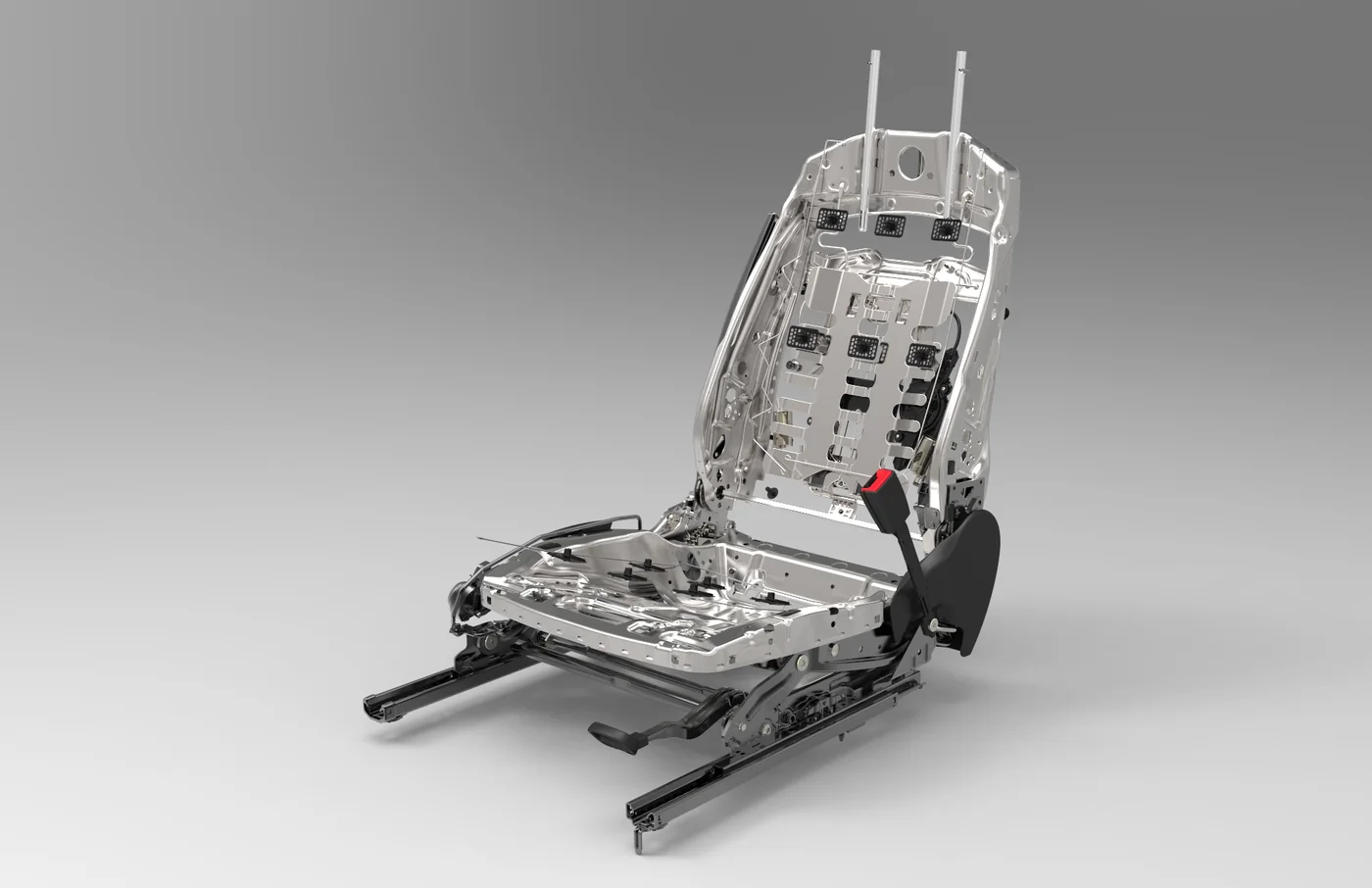
Application Overview
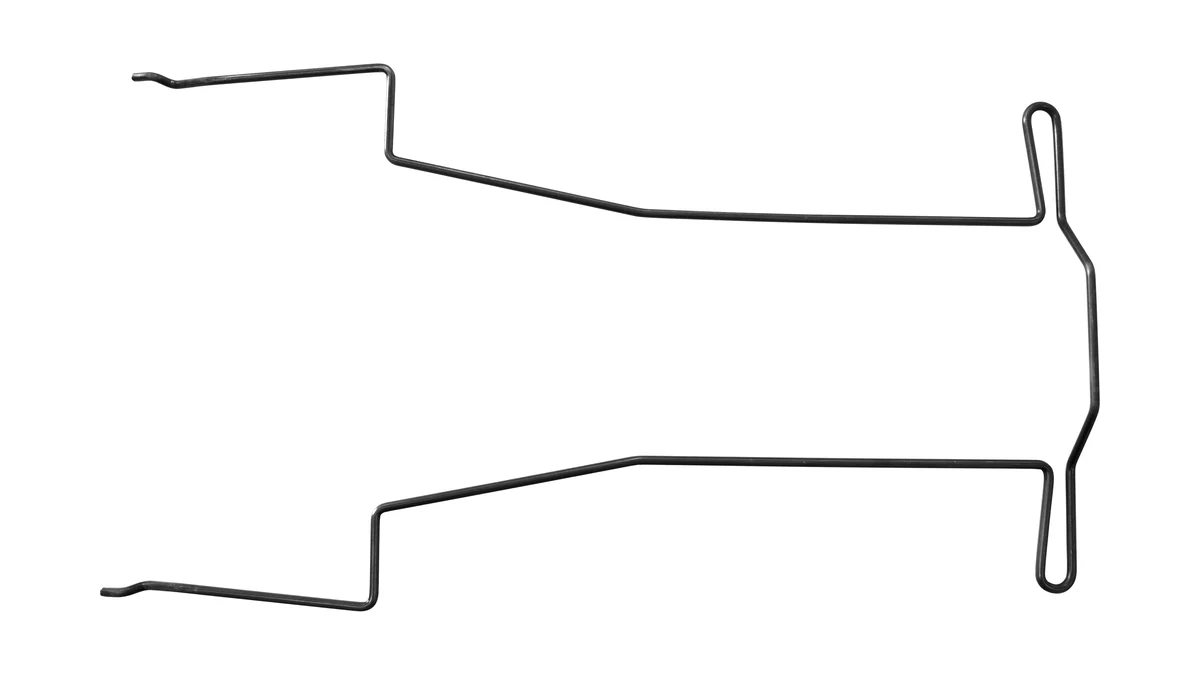
Seat support wire is a formed wire component used within an automotive seat structure. This page covers a seat wire frame: a 3D formed wire part with multiple bends, made from Ø4.5 mm SWRH82B wire.
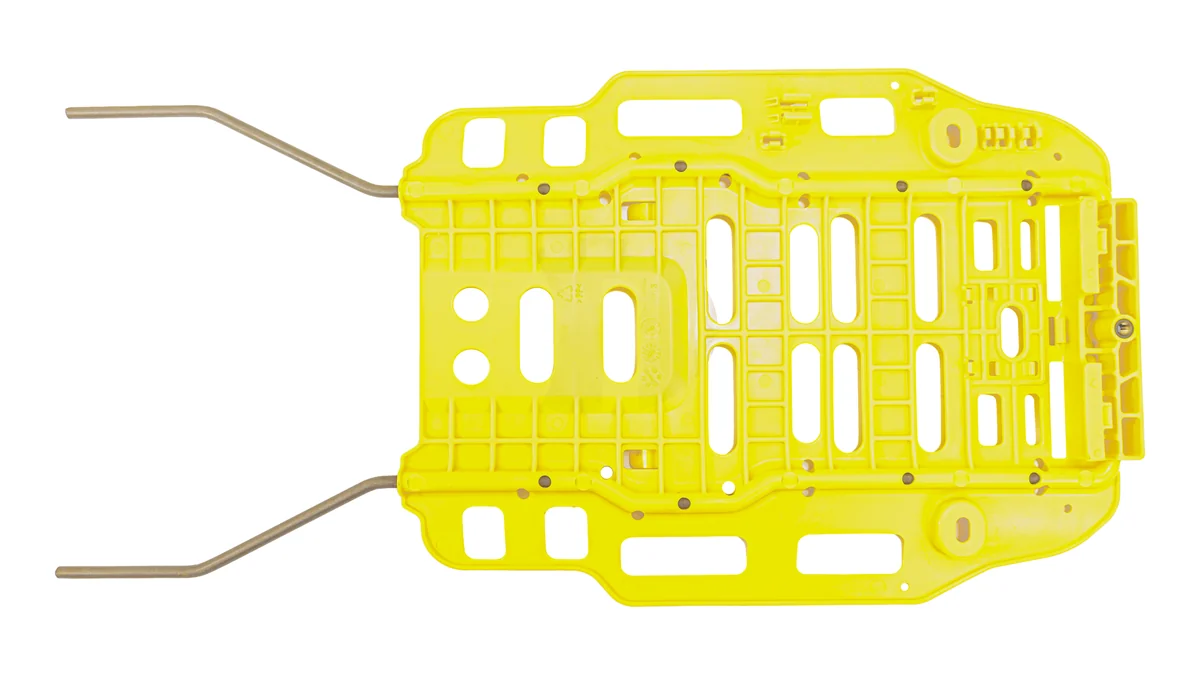
The images show the formed part on its own and fitted to a plastic seat component. In an assembly like this the wire has to meet the part it is fitted to, so the position of every bend matters, not just the overall shape.
Part, Material and Production Facts
- Application
- Automotive seat support wire
- Material
- SWRH82B
- Wire diameter
- Ø4.5 mm
- Part type
- 3D formed wire, multiple bends
- Machine
- HM-R580
- Production reference
- Approx. 1 pc/min
The production reference is the rate for this application, not a general machine rate. Final machine selection depends on the part drawing, material, dimensions, tolerances and production requirements.
Why This Part Needs 3D Wire Forming
A multi-bend 3D wire part is built one bend at a time, so the position and angle of each bend carry into the next. A small deviation early in the sequence can show up in the finished geometry.
That is why dimensional consistency is the central requirement for this application, and why the whole sequence is formed on one machine under one program rather than being spread across separate operations.
Production Process
- 1Coil Feeding
- 2Straightening
- 3Bending
- 4Cutting
Machine Used: HM-R580
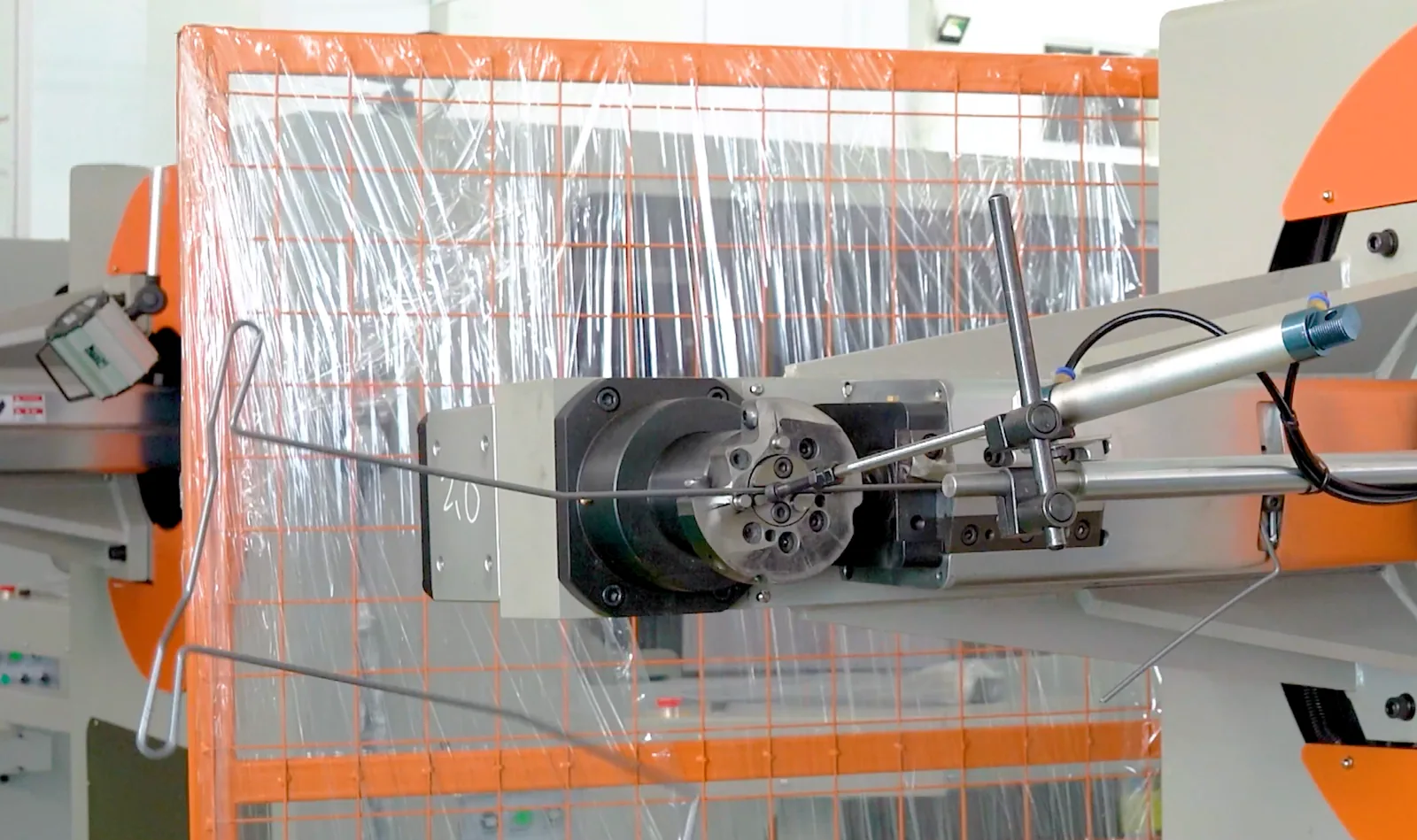
This application is produced on HM-R580, a 5-axis CNC wire bending machine for Ø2.5–8 mm wire. The Ø4.5 mm seat wire frame sits within that range. Coil feeding, straightening, bending and cutting are all completed on the one machine; the formed part is then removed.
Dimensional Requirements
- Production dimensional control
- Approx. ±0.03 mm
- High-requirement checking fixtures
- Within approx. 0.05 mm
These are validated-production figures for this application's setup. They are not a general HM-R580 accuracy specification, and they depend on the part, material and setup.
Unloading and Automation Options
In the standard setup, finished parts are removed by hand. Where volume or handling requirements call for it, robotic unloading and a conveyor can be integrated.
Production Solution Engineering →Related Automotive Applications
Have a seat wire part in mind? Send us your part drawing and production requirements — our engineers will review the part and help confirm the right configuration.
Ready to discuss this part?
Our engineers will review your drawing and respond with feasibility and machine recommendations.