
Automotive Solid Headrest Rods
Ø10 mm and Ø12 mm solid Q235 rod, formed in 3D from coil on a single HM-R5120.
- Material
- Q235
- Diameters
- Ø10 / Ø12 mm
- Machine
- HM-R5120
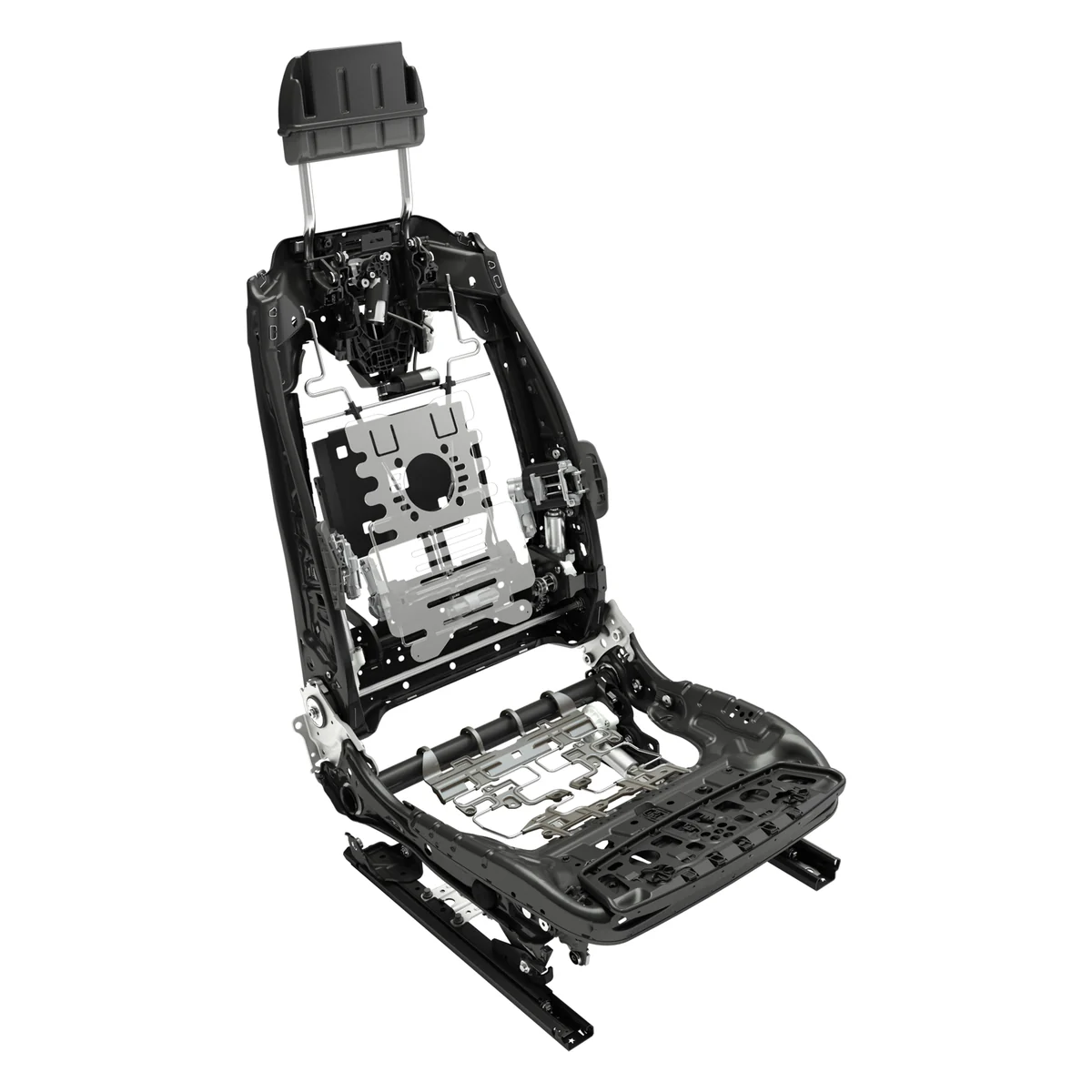
Role of the Rods in a Headrest Assembly
In a seat, the headrest is carried on two rods that locate it above the seat back. This page covers the solid-rod version: solid Q235 rod in Ø10 mm and Ø12 mm, formed into a 3D shape.
The rod's bends and its straight sections both matter. The bends set where the rod goes, and the straight section that protrudes has its own deviation requirement.
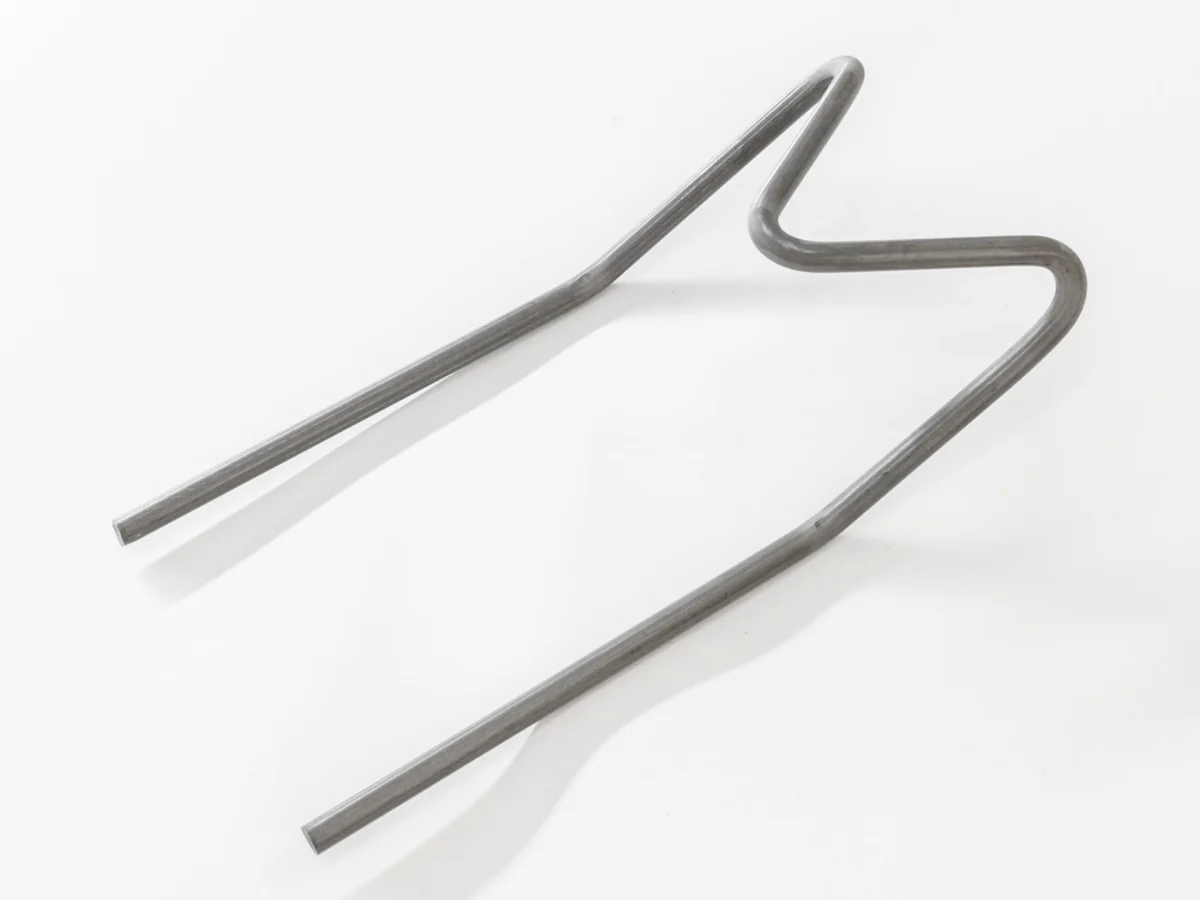
Part, Material and Requirement Facts
- Application
- Solid automotive headrest rod
- Material
- Q235
- Diameters
- Ø10 mm and Ø12 mm
- Part type
- 3D solid rod / wire-formed component
- Machine
- HM-R5120
- Production reference
- Approx. 8 pcs/min
- Critical positioning dimensions
- Approx. ±0.03 mm
- Straight protruding section deviation
- ≤0.20 mm
The positioning figure is validated-production data for this application's setup, and the production reference is a rate for this application. Neither is a general HM-R5120 specification. Final machine selection depends on the part drawing, material, dimensions, tolerances and production requirements.
Solid Rods and Hollow Tubes Are Different Applications
This page is about solid rod, formed from coil on a CNC wire bending machine. Hollow headrest tubes are a separate application: they start as tube and go through tube cutting, end processing, CNC tube bending and tooth forming on tube-processing equipment.
Automotive Headrest Tube Manufacturing (hollow tube) →Production Process
- 1Coil Feeding
- 2Straightening
- 3Bending
- 4Cutting
Machine Used: HM-R5120
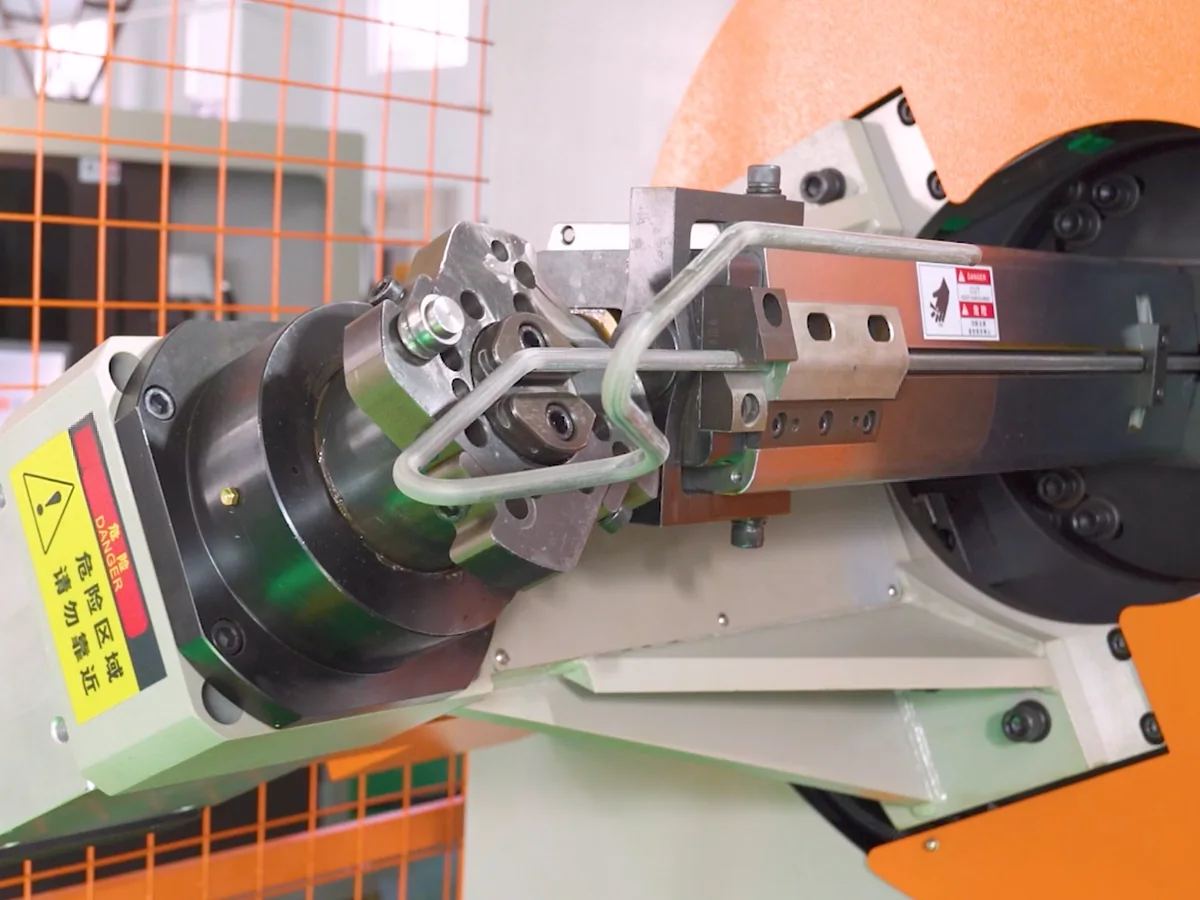
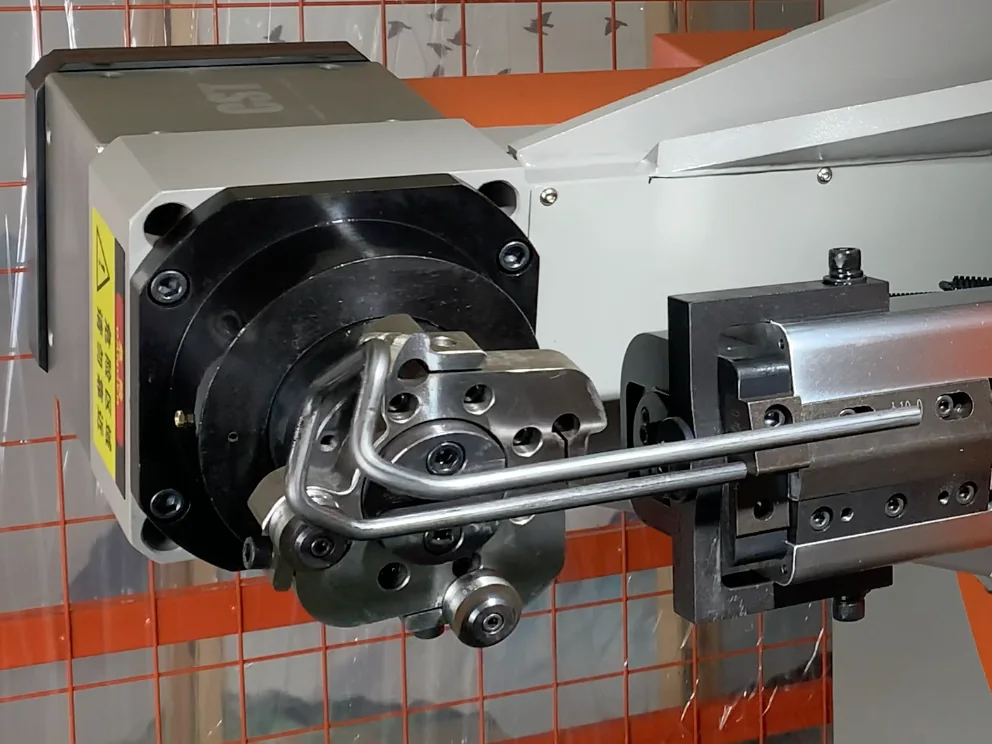
This application is produced on HM-R5120, a 5-axis CNC wire bending machine for Ø5–12 mm wire. Both rod diameters fall within that range, with Ø12 mm at its upper end. Coil feeding, straightening, bending and cutting are completed on the one machine, and parts are removed by hand in the standard setup.
Automation Options and Extended Lines
Robotic unloading and conveyor integration can be added to the standard setup. Where the rod needs further processing, laser positioning, serration/notching and chamfering can be integrated into a customized automated line when required.
Production Solution Engineering →Related Automotive Applications
Have a headrest rod or similar formed-rod part in mind? Send us your part drawing and production requirements — our engineers will review the part and help confirm the right configuration.
Ready to discuss this part?
Our engineers will review your drawing and respond with feasibility and machine recommendations.