
Automotive Trunk Latch Strikers
A 3D formed wire striker for front and rear luggage-compartment latches, formed on an HM-R580 and welded downstream.
- Material
- Q235
- Wire
- Ø6.9 mm
- Machine
- HM-R580
What the Striker Does
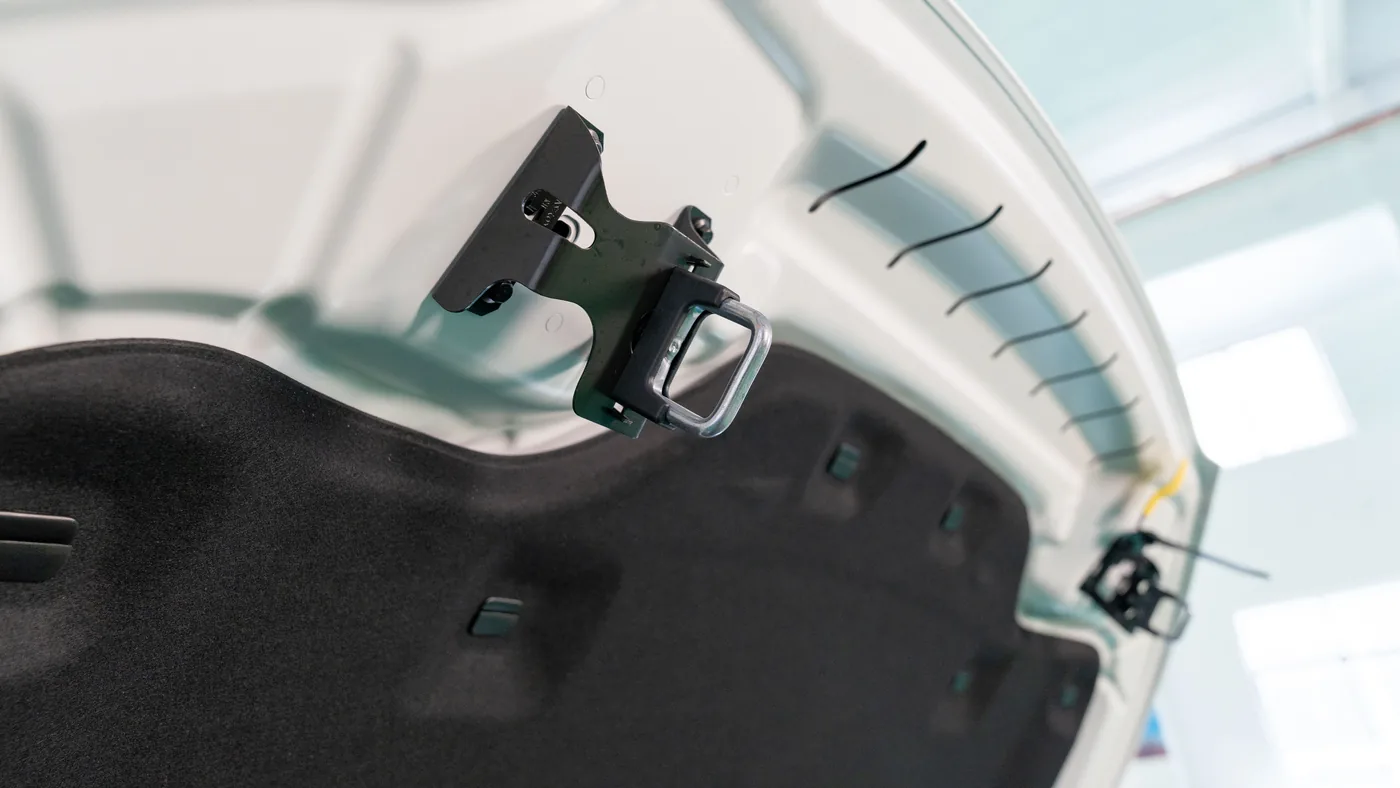
A latch striker is the fixed catch that a luggage-compartment latch engages to hold the lid closed. This page covers a front/rear luggage-compartment (trunk) latch striker made from Ø6.9 mm Q235 wire.
The part is a formed wire loop with a straight leg. Its shape is 3D rather than flat, and the photo above shows it installed on a lid.
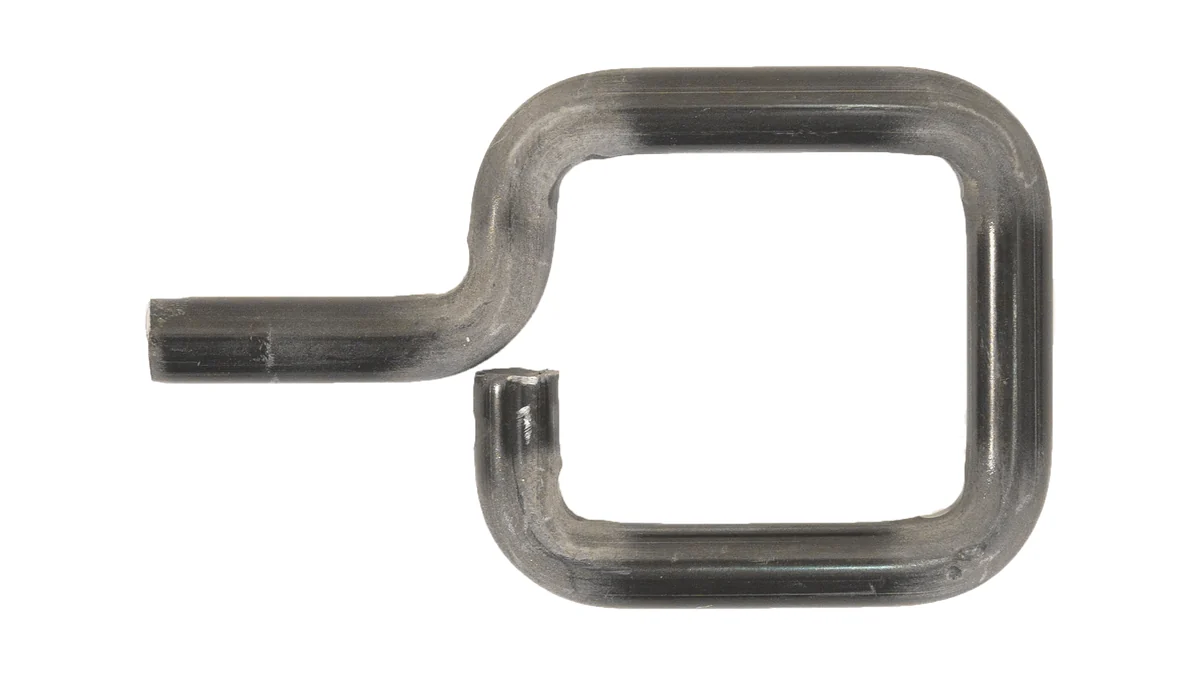
Part, Material and Production Facts
- Application
- Front/rear luggage-compartment latch striker
- Material
- Q235
- Wire diameter
- Ø6.9 mm
- Part type
- 3D formed wire component
- Machine
- HM-R580
- Production reference
- Approx. 14 pcs/min
- Height / dimensional deviation requirement
- Within approx. 0.20 mm
- Downstream operation
- Welding
The production reference and deviation requirement are for this application, not general machine specifications. Final machine selection depends on the part drawing, material, dimensions, tolerances and production requirements.
Why Dimensional Consistency Matters Here
Welding is a downstream operation in the production of this part, and the formed wire then goes on to assembly. Whatever variation exists after forming is carried into both steps, so consistent geometry at the forming stage is what the later operations depend on.
The requirement for this application is a height / relevant dimensional deviation within approximately 0.20 mm.
Production Workflow
- 1Coil Feeding
- 2Straightening
- 3Bending
- 4Cutting
- 5Downstream: Welding
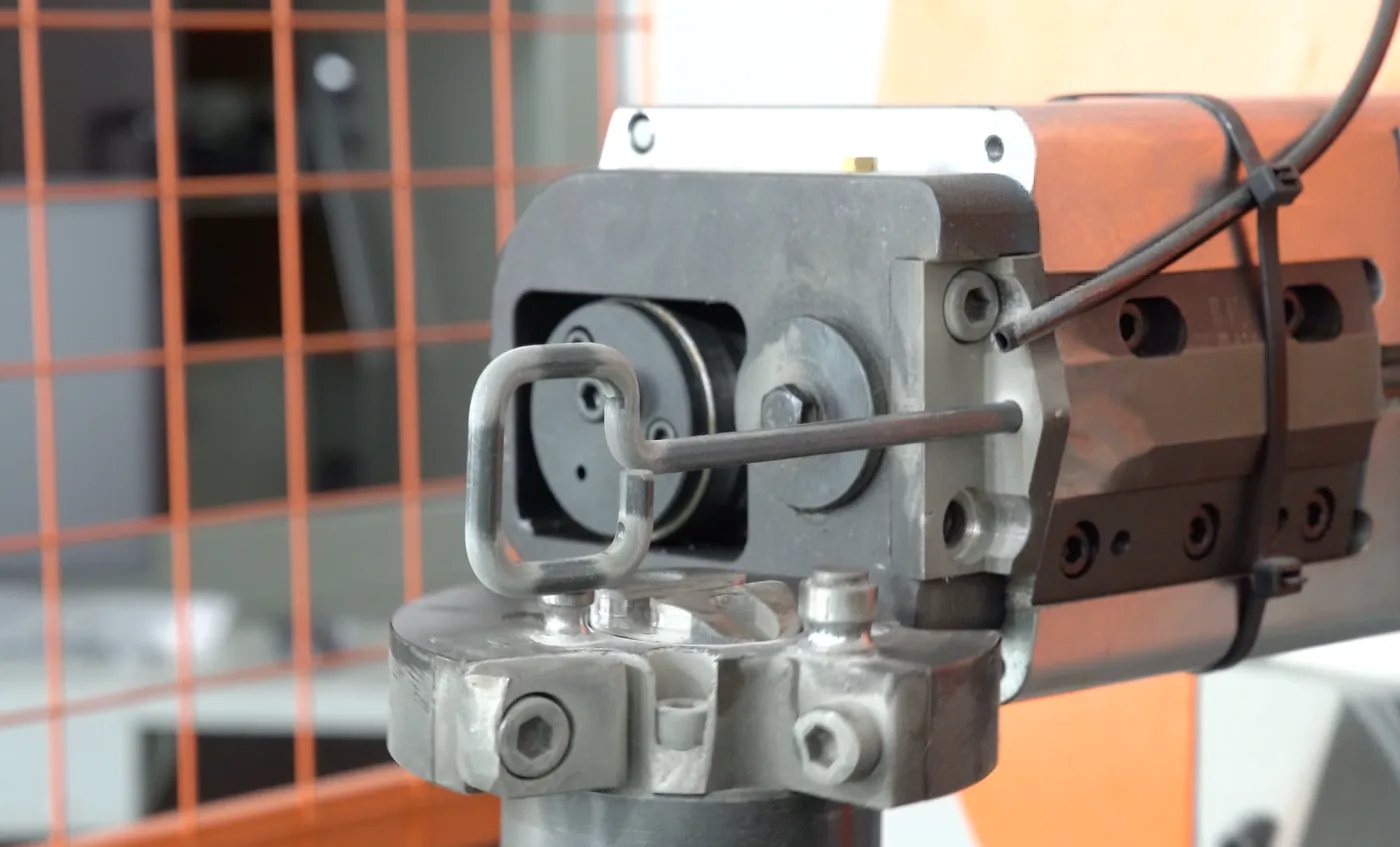
Machine Used: HM-R580
The first four steps are completed on HM-R580, a 5-axis CNC wire bending machine for Ø2.5–8 mm wire; the Ø6.9 mm striker wire sits within that range. Welding is a separate downstream operation and is not performed by the forming machine.
Inspection and Checking-Fixture Verification
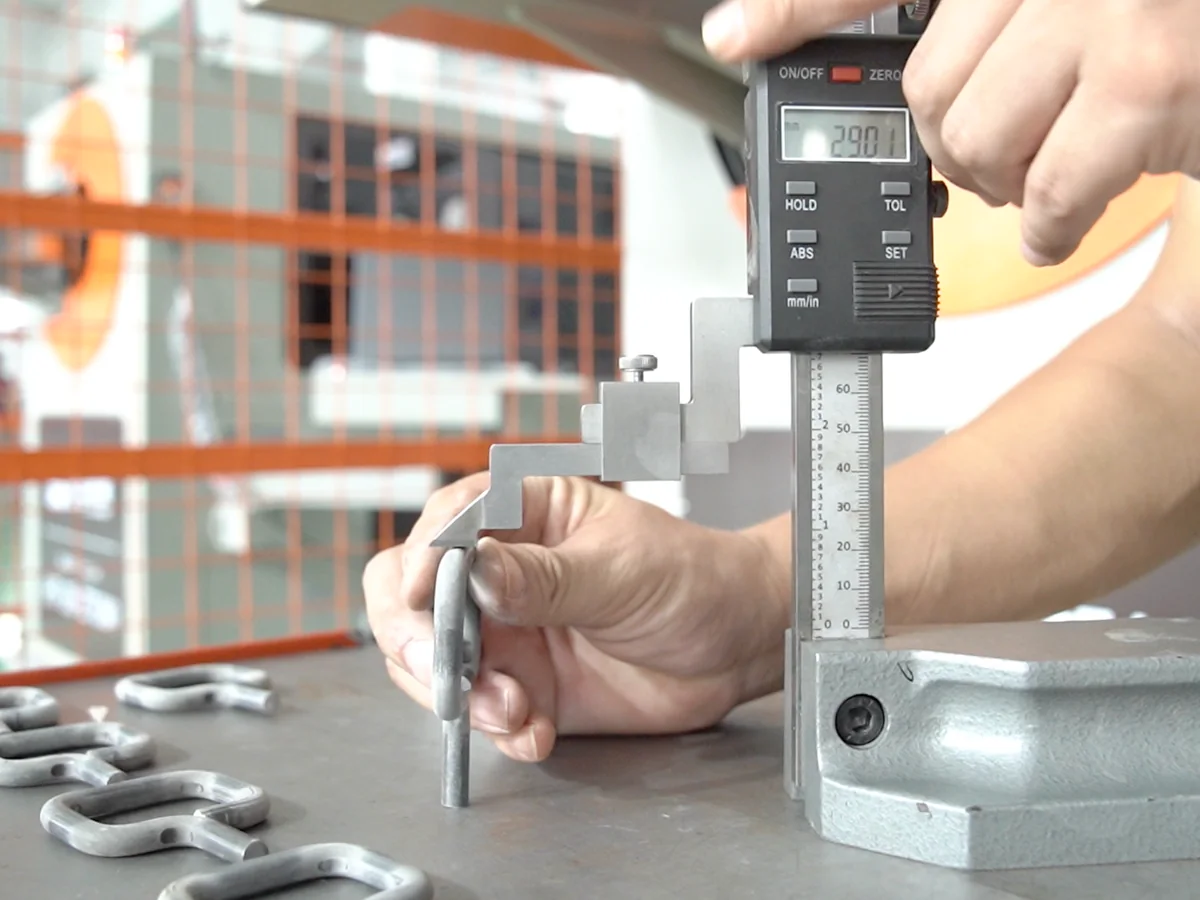
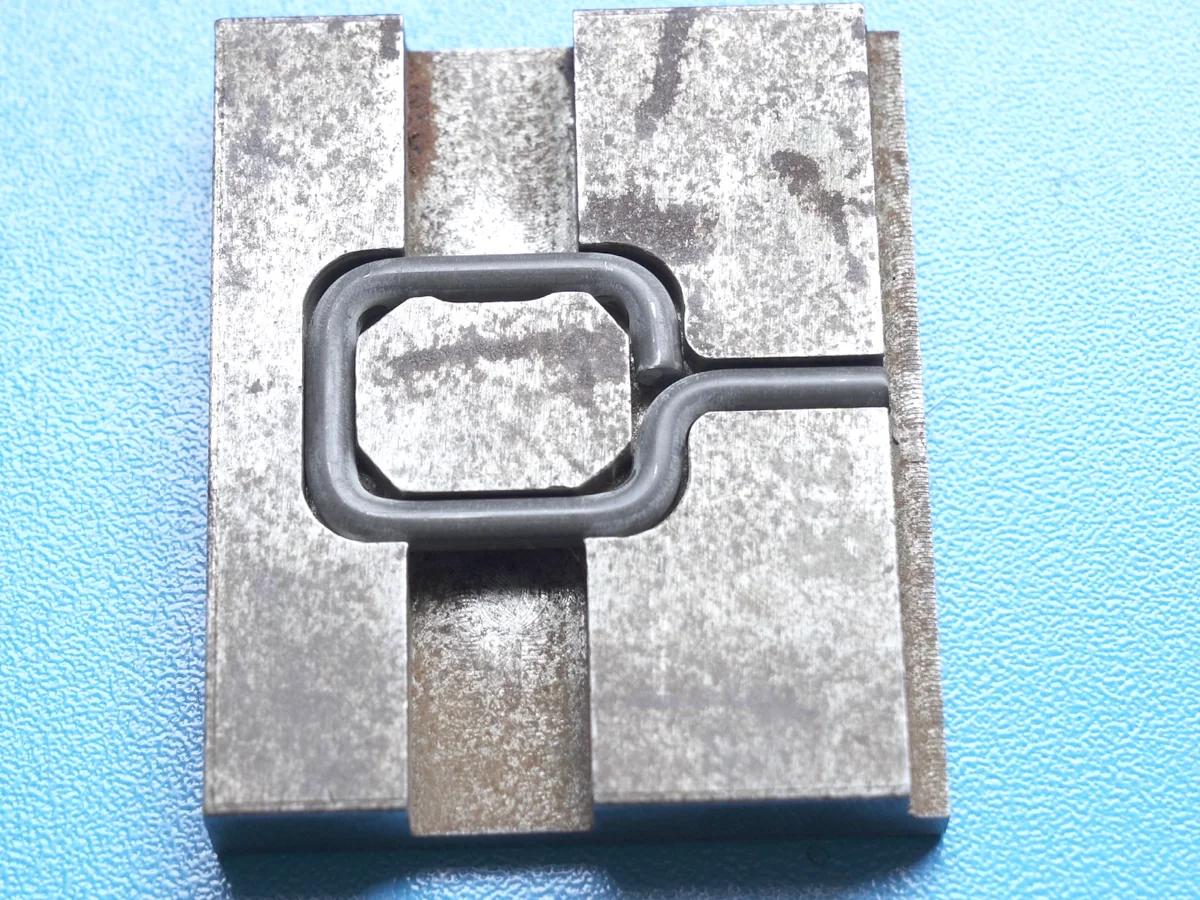
Quality control for this part includes dimensional measurement and checking-fixture verification. The images show a formed striker being measured with a digital height gauge and a formed striker seated in a checking fixture.
Unloading and Automation Options
In the standard setup, finished parts are removed by hand. Robotic unloading and conveyor integration are available when required, and the handoff to the downstream welding step can be reviewed as part of the production solution.
Production Solution Engineering →Related Automotive Applications
Have a latch or wire-formed automotive part in mind? Send us your part drawing and production requirements — our engineers will review the part and help confirm the right configuration.
Ready to discuss this part?
Our engineers will review your drawing and respond with feasibility and machine recommendations.